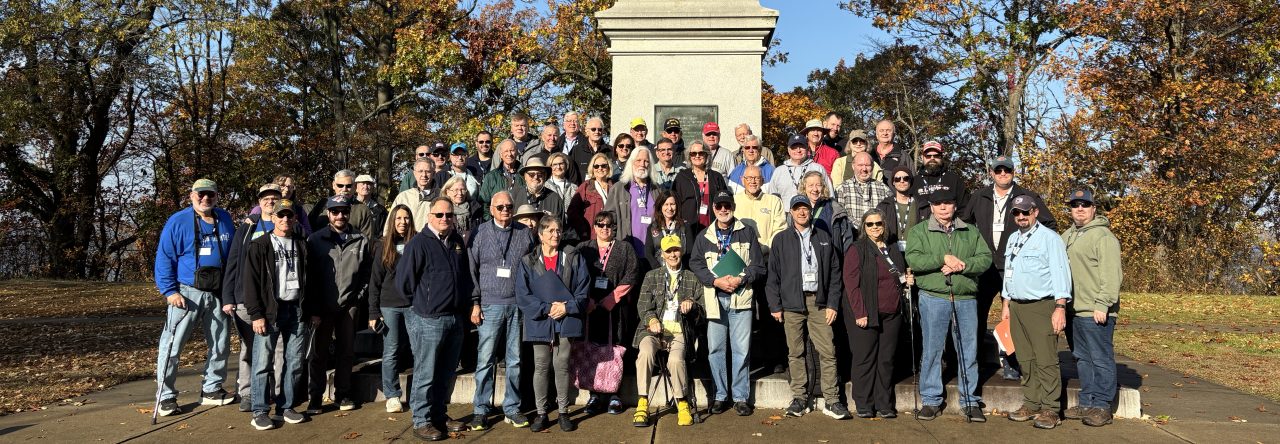
Only three weeks are left to register for the “Road to Revolution” Seminar on November 6-7! Emerging Revolutionary War is excited to partner with Fort Ligonier for this seminar focusing on the early years of the Revolutionary War and connections to the French and Indian War in western Pennsylvania. Saturday’s speaker lineup includes ERW’s very own Dan Welch, as well as renowned authors Michael Harris, Kevin Weddle, and other great presenters. More information about the event and how to register can be found here. We hope to see you there!
A quick Google search reveals that approximately 230,000 men served in the Continental Army during the eight years of the American Revolutionary War. A handful of those rank-and-file soldiers are well known, like Joseph Plumb Martin. A smattering of junior officers, like John Eager Howard or Robert Kirkwood, Jr. usually ring a bell of memory for those enthusiasts of the Revolution. Of the 73 generals that received, earned, or were granted commissions in the Continental Army more names are what we colloquially refer to as “household names.” Thousands more served in militias and on the water with the fledgling Continental Navy or aboard privateers.
I would not be raising a contentious point when I say that the majority of the men who donned the Continental uniform, fought, froze, starved, were wounded, and/or survived are lost to history. Through a myriad of reasons and mostly not from any fault of theirs. That is why, when doing research, especially with the aid and power of the internet, finding personal accounts, reminiscent, and battlefield stories, the Revolutionary era historian gets excited. That excitement generated this post.
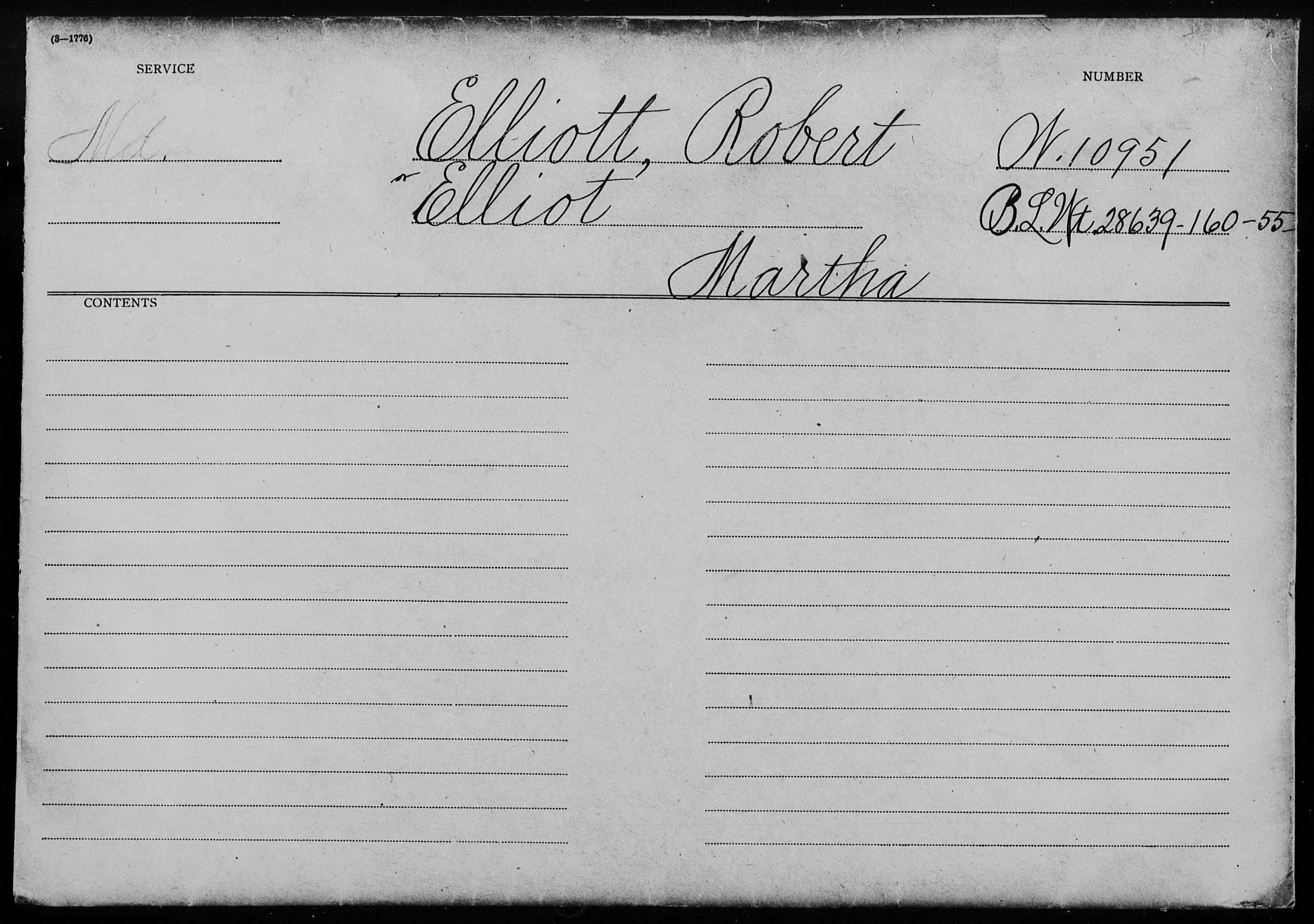
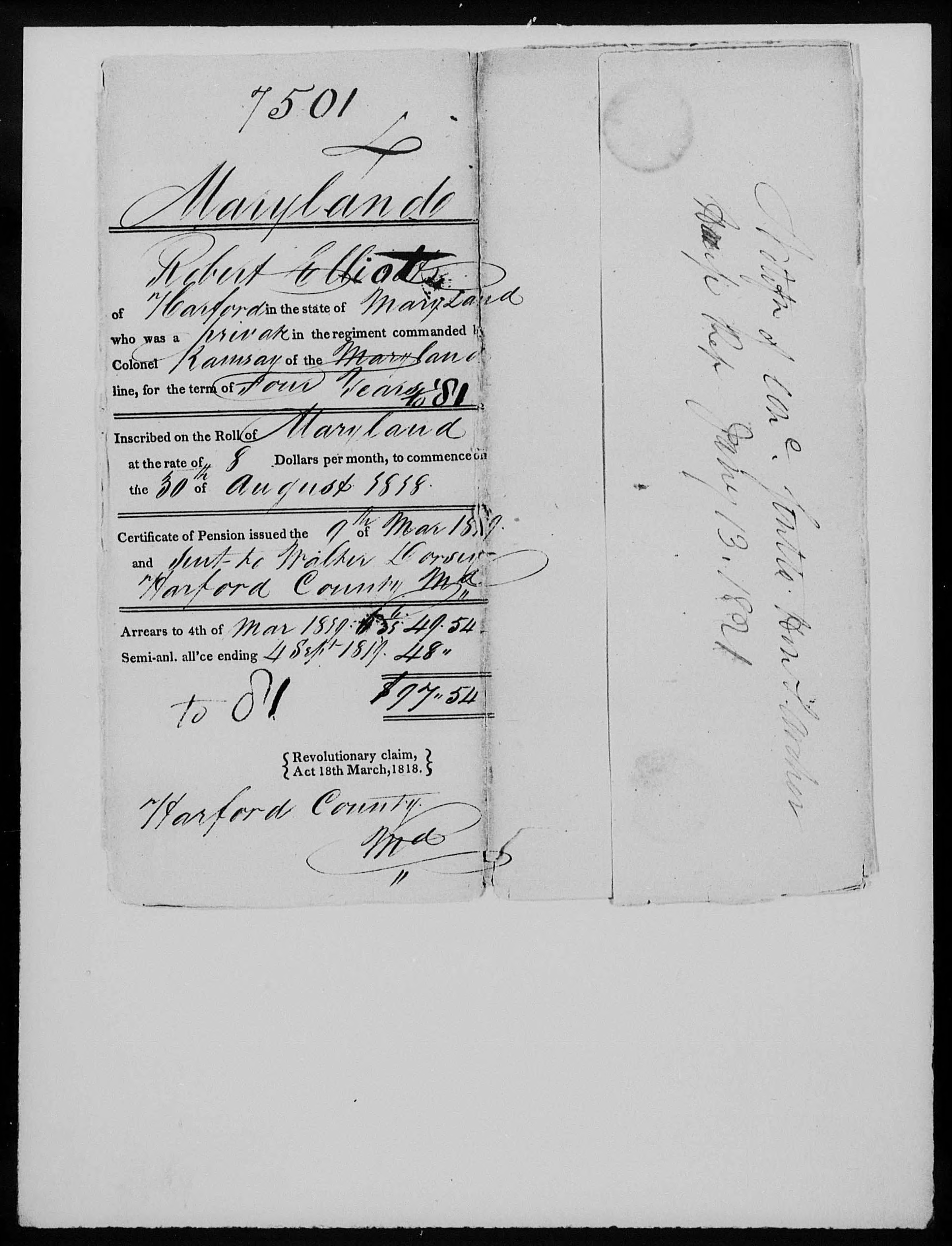
While researching in general, for posts to bring to you, and for potential upcoming publications, I came across, naturally, the website for the National Archives. Many of you have accessed the site and/or visited the archives in Washington D.C. to do primary research. Nothing new to elaborate with on that point. However, I was intrigued by a new–to me–section of the website research section. The page was labeled “Citizen Archivist Dashboard, Stories from the Pension Files.”
Join us Sunday, October 4th at 7pm as we continue our series on the 250th of the New York Campaign. We welcome back ERW authors Mark Maloy and Dan Welch as they cover the events from the Battle of Harlem Heights to the Battle of White Plains. In the fall of 1776, George Washington struggled to keep his army together and keep the British Army at bay. From the strategic to the tactical, and what to see there today, this will be a revelry you will not want to miss.
This Revelry will be LIVE on our Facebook page, so join in on the conversation via the chat!
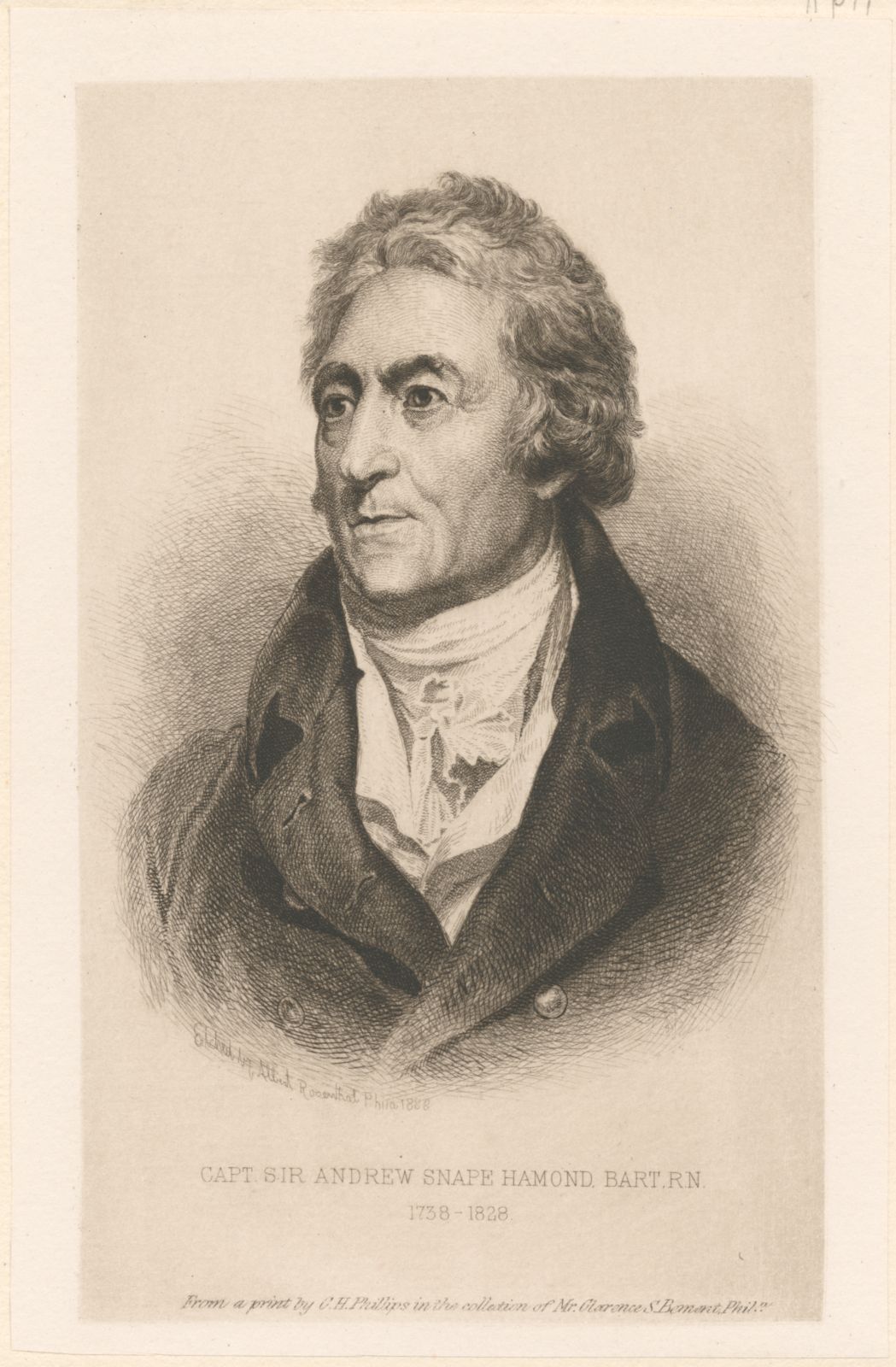
Captain Andrew Snape Hamond commanded the fifth-rate Royal Navy’s Roebuck. Although her 44-guns and rating technically qualified her for a position in a line of battle, a fifth-rate was among the smallest vessels considered for such a role in the Royal Navy. Yet, in February 1776, when Roebuck began operating off the American coast, she was one of the larger ships available to Vice Admiral of the Blue Molyneaux Shuldham, who had replaced Admiral Samuel Graves as the commander of the North American station.
Rather than adding to the growing flock of vessels in Boston, Shuldham sent Hamond and Roebuck south to patrol the colonial coasts, enforce the Coercive Acts, and stop ships smuggling gunpowder and arms. The task was all the more difficult since fighting had broken out and colonial governments had collapsed everywhere. Royal Governors fled to Royal Navy vessels, from which they attempted to preserve some modicum of British authority and rally loyalists to the king’s cause. Roebuck was not on station long before orders from Graves arrived and directed the captain to move his ship to the mouth of Delaware Bay and patrol the bay and river.[1] An aggressive sort, he exchanged fire with Delaware’s militia near Lewes at the capes on April 7, and then took his little flotilla up the Delaware fought Pennsylvania’s little navy near Wilmington on May 8-9.
Then it was down to the Chesapeake for the summer to provide some backbone to Royal Navy vessels operating in the lower Chesapeake Bay in support of Lord Dunmore, the royal governor, who had built his own little flotilla of ships to house loyalists and their defenders, but Hamond considered the task impossible. He wasn’t happy with it and wrote an acquaintance in August, “I have been under the absolute necessity of giving to Lord Dunmore & his floating Town, consisting of a fleet of upwards of 90 Sail, destitute of almost every material to Navigate them, as well as seamen, has given full employment for three Ships, for these three months past, to prevent them from falling into the hands of the Enemy.”[2] But, the assignment also convinced him that the Chesapeake was ripe for offensive naval operations, particularly if combined with significant land forces.
Shortly after penning his letter, Hamond and Roebuck departed Virginia, bound for New York. His crew was sick, as were the soldiers and civilians crowded aboard Dunmore’s ships and swampish haven on Gwynne’s Island. Lord Dunmore, for one, was grateful for Hamond’s service in the Chesapeake. As the vessel sailed north, Dunmore penned a letter to Lord George Germain, counting illness among his own forces, but praising Roebuck as “well regulated, and as clean a Ship as any in the Navy,” also noting that many of its crew were ill.[3] Once in New York, Hamond and his vessel supported the Army’s landings and advance on American positions on Long Island.
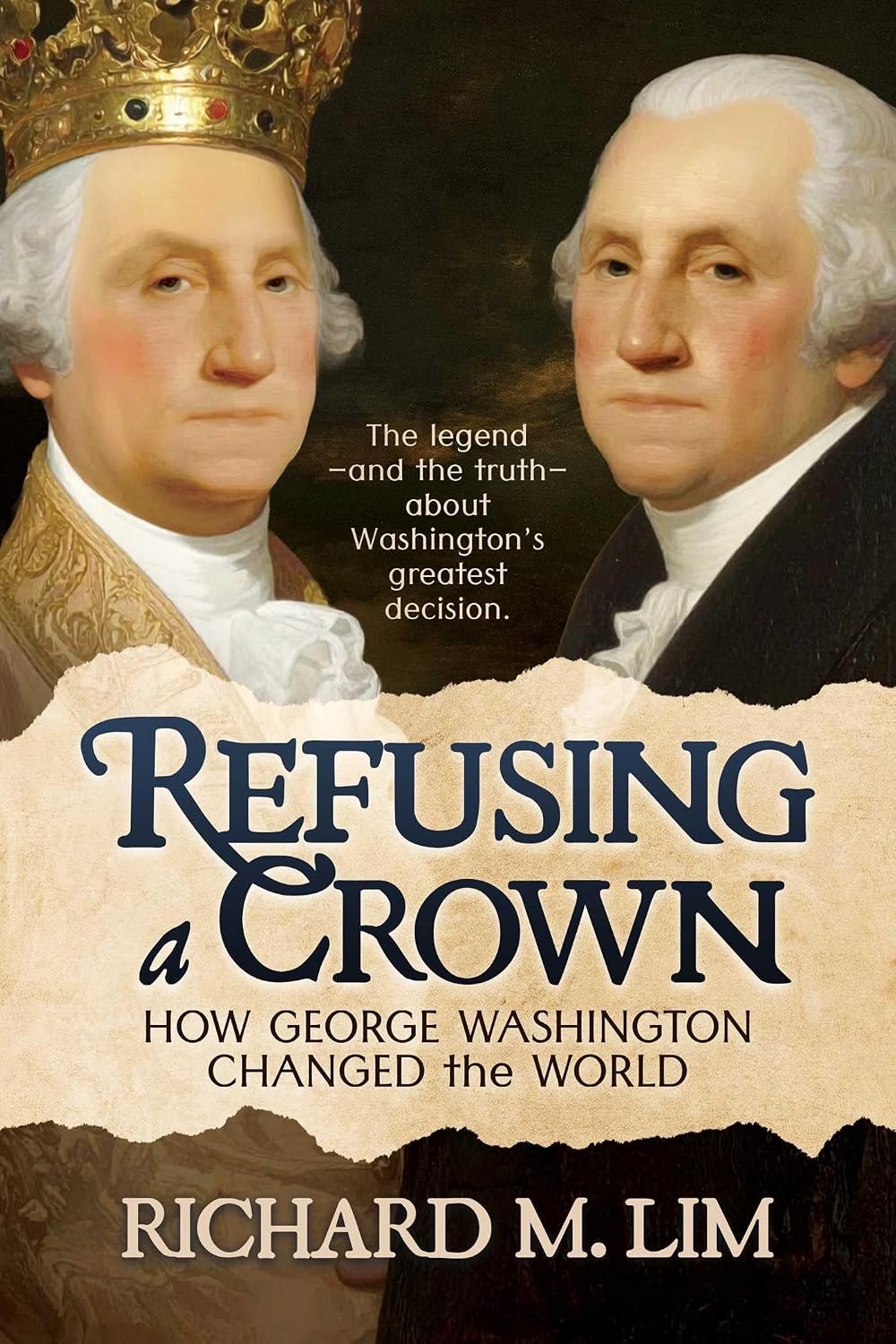
Join us this Sunday at 7pm on our Facebook page for our latest Rev War Revelry installment where we will welcome historian and author Richard Lim to discuss his new book; Refusing a Crown: How George Washington Changed the World . Lim explores America’s surprisingly complex transition from monarchy to republican government through the life and leadership of George Washington. The book argues that Washington’s decisions to relinquish power helped establish the norms of republican government not only in the United States but also inspired revolutionaries and reformers in Europe, Latin America, and Asia. It also examines how Judeo-Christian ideas about virtue, duty, and self-government shaped Washington’s understanding of leadership and informed some of his most consequential decisions. Timed for America’s 250th anniversary, the book offers a fresh perspective on how Washington’s example changed the course of world history.
This Revelry is pre-recorded and will post to our Facebook page this Sunday, September 20, 2026 at 7pm. You can also view it on our You Tube Channel.
We are excited to announce a NEW tour opportunity with Emerging Revolutionary War. Next Spring, May 1-2, 2027, we will be hosting a car caravan tour covering sites in Western Pennsylvania relating to George Washington’s time in the French and Indian War.
The tour will last all day Saturday and end at noon on Sunday, sites will include Jumonville Glen, Fort Necessity, Fort Ligonier, Braddock’s Defeat and a few other surprises! The cost of the tour is $150 per person. Meals, transportation, and accommodations are on your own. We have set up a room block at the Courtyard Marriott – Pittsburg/Greensburg for $189.00 a night. The hotel is located at 700 Power Line Drive, Greensburg, PA. For reservations, call 724-834-3555 and mention “Emerging Revolutionary War.”
To purchase tickets, email us at:emergingrevolutionarywar@gmail.com. We expect tickets to go fast as they are limited, so reach out soon if you are interested. We look forward to sharing our enthusiasm for early American history with this new tour. Many have enjoyed our annual fall bus tour, so we hope this provides additional ways to walk in the footsteps of history with ERW!
Following the American debacle at Kip’s Bay the previous day, the British troops marched into New York City and the Americans fell back to their entrenchments on Harlem Heights.
Washington ordered a small party of 150 men under the command of Lt. Col. Thomas Knowlton to move out and reconnoiter the British position. Knowlton quickly recognized the British were not planning a major assault but his force had brought about the attention of the British light infantry. Soon Knowlton’s Rangers were outnumbered and quickly retreated back to the American lines. When Knowlton reached safety, the British light infantry paused, placing them out in front of their main lines. Washington seized the opportunity and ordered an assault on their rear by Knowlton’s men and a reinforcement of 200 Virginia soldiers from the 3rd Virginia Regiment under Major Andrew Leitch.
Though the American attack was supposed to be in the rear of the British light infantry, because of confusing terrain and attacking too soon, the flanking column instead hit the British in their flank. The attack still had an adverse effect on the British light infantry as they began to fall back. The Americans fought with determination and bravery. Washington wrote the next day that “The General most heartily thanks the troop commanded yesterday by Major Leitch, who first advanced upon the enemy, and the officer who so resolutely supported them.”
At the head of the attacking column both Knowlton and Leitch led their men forward to attach the British flank. Early in the attack both men went down wounded. Knowlton died that day, Leitch took three musket balls to the abdomen and was carried off the field. At first most reported his condition as improving and he was thought to survive his ordeal. But he would eventually die a few weeks later, the doctor writing that “[I] disagreeable duty of informing Mrs. Leitch through you, of the death of her husband is imposed upon me. He expired yesterday morning at Hackinsack Bridge where he had been removed for his better accommodation…But on the 28th Sept he was seized by lock’d jaw – with spasms about his neck and throat so violent as to baffle every effort to minister to him by medicine.”
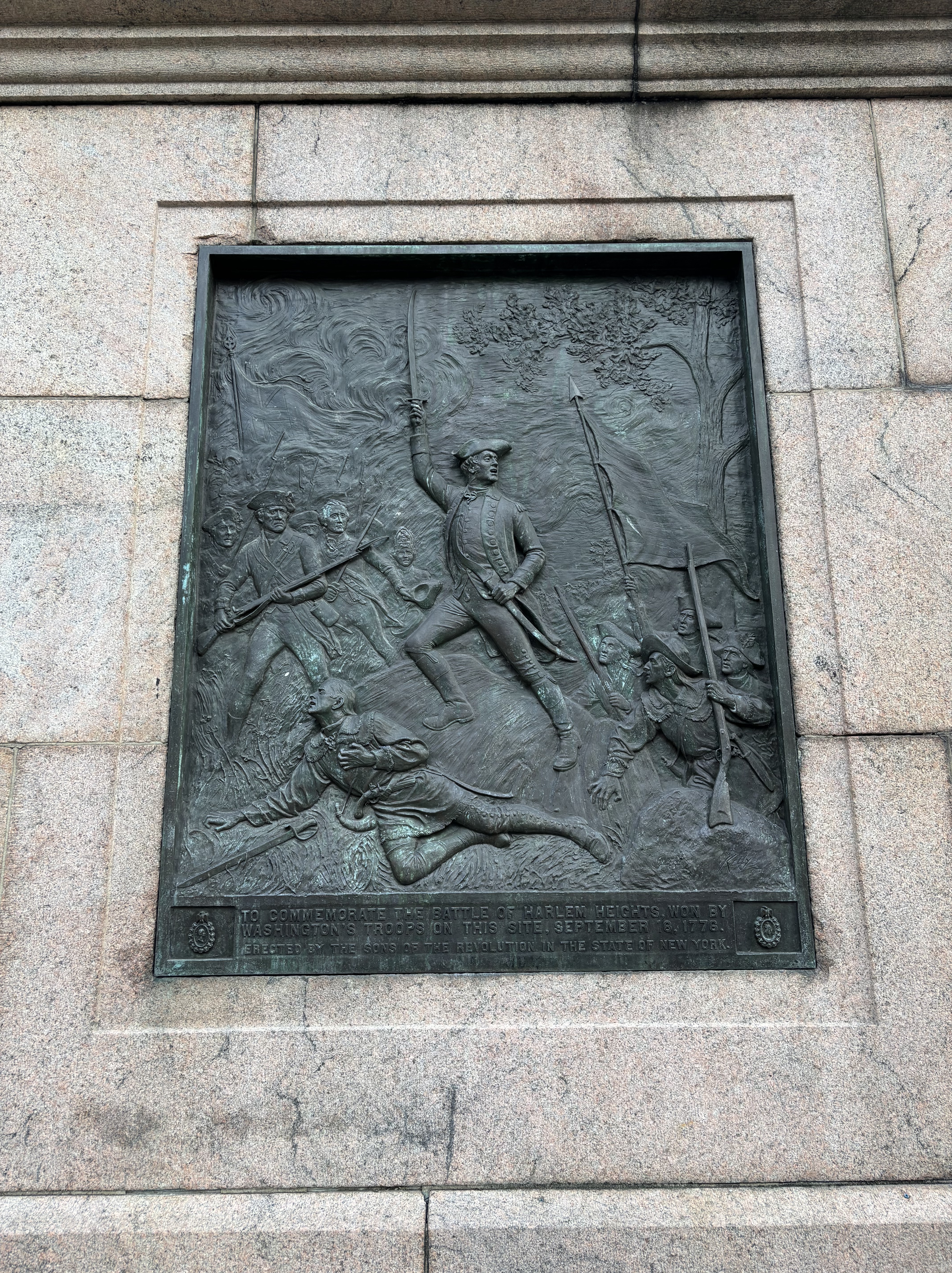
Plaque with Knowlton raising his sword and Leitch falling and grabbing his chest.
Soon the British began to retreat back to their main line. Washington then ordered an attack along his line and the British light infantry fell back to the main line in confusion. Soon the entire British line began to give way. After about a 90 minute fight, Washington learned that more British forces were arriving on the field and ordered his men back to the main line. Though not a major victory, the American army had finally stood up to the British and even for a moment, pushed them off the field in combat. The British suffered 14 killed and an estimated 154 wounded, with the Americans suffering 30 killed and 100 wounded.
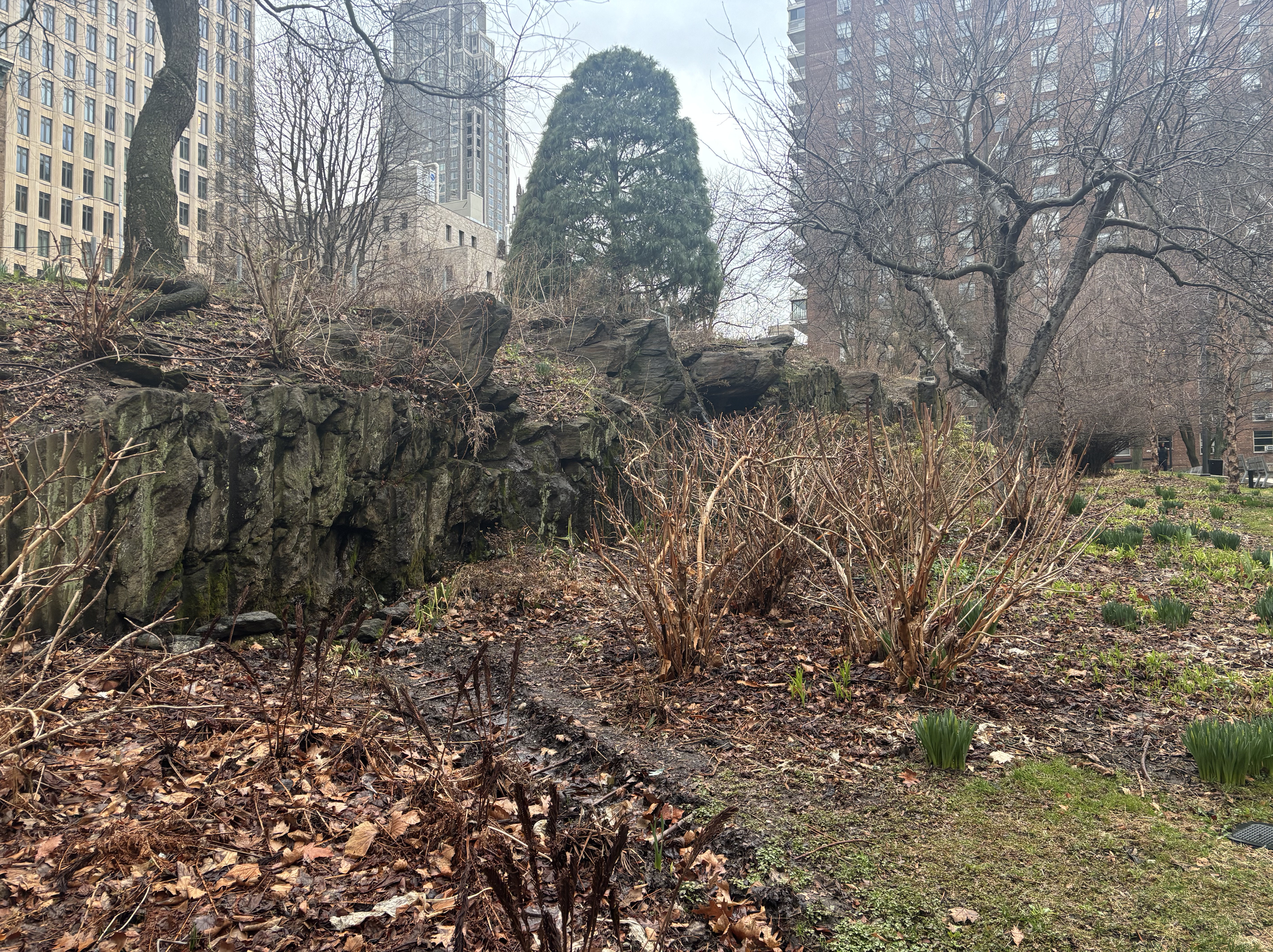
Today the area of the Harlem Heights battlefield is now partly under the campus of Columbia University in New York City. There is a simple plaque on the wall on the east side of Broadway north of 117th Street. This plaque commemorates the Battle of Harlem Heights and depicts Major Andrew Leitch and Lt. Col. Thomas Knowlton being wounded. You can still see the rock ledge nearby where they launched their ill-fated attack. Near here is where Leitch was mortally wounded while turning the flank of the British line.
The rock ledge where Knowlton and Leitch were mortally wounded.
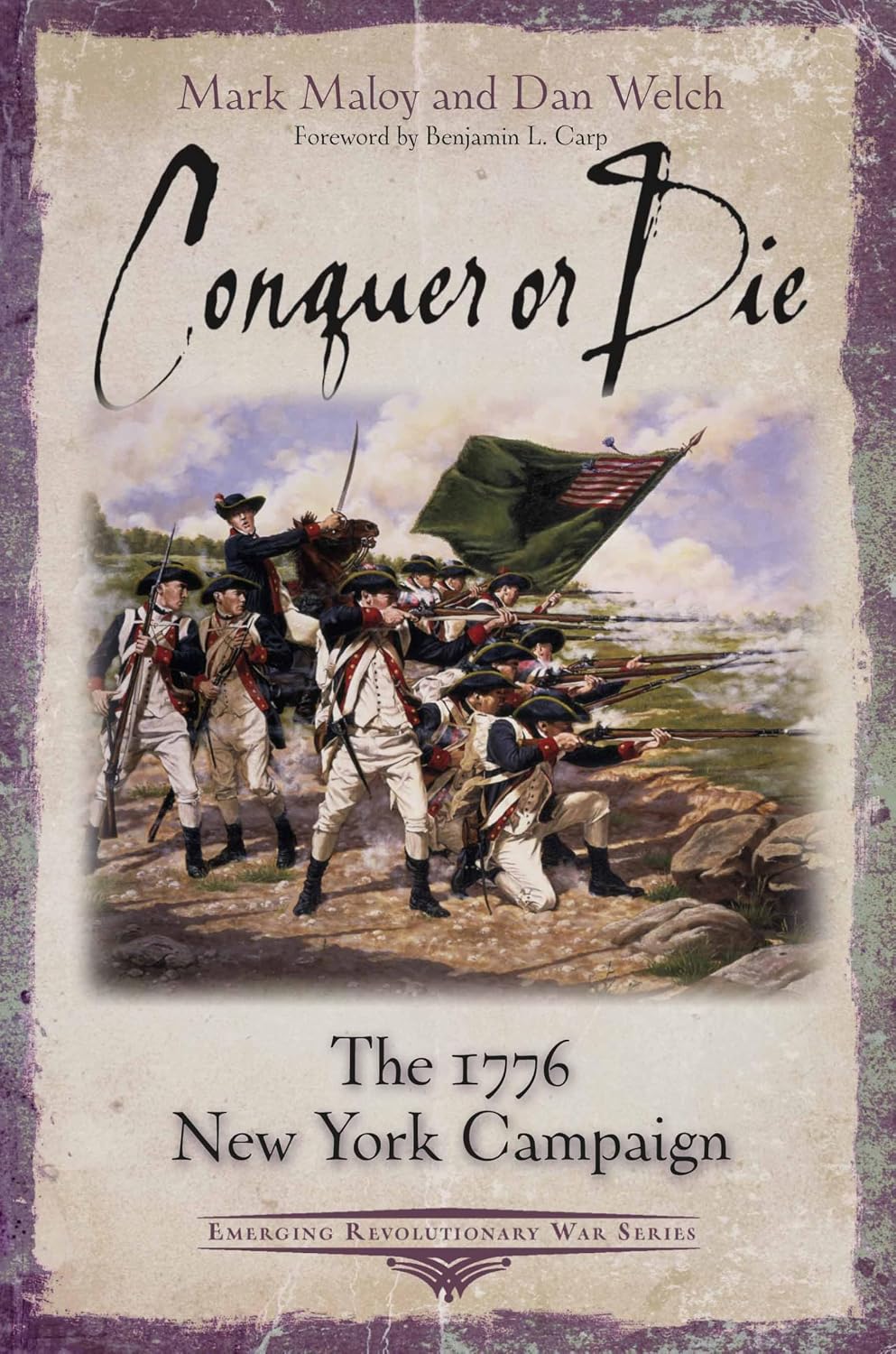
Learn more about this historic event in Mark Maloy and Dan Welch’s new book on the 1776 New York campaign: Conquer or Die, out this November!
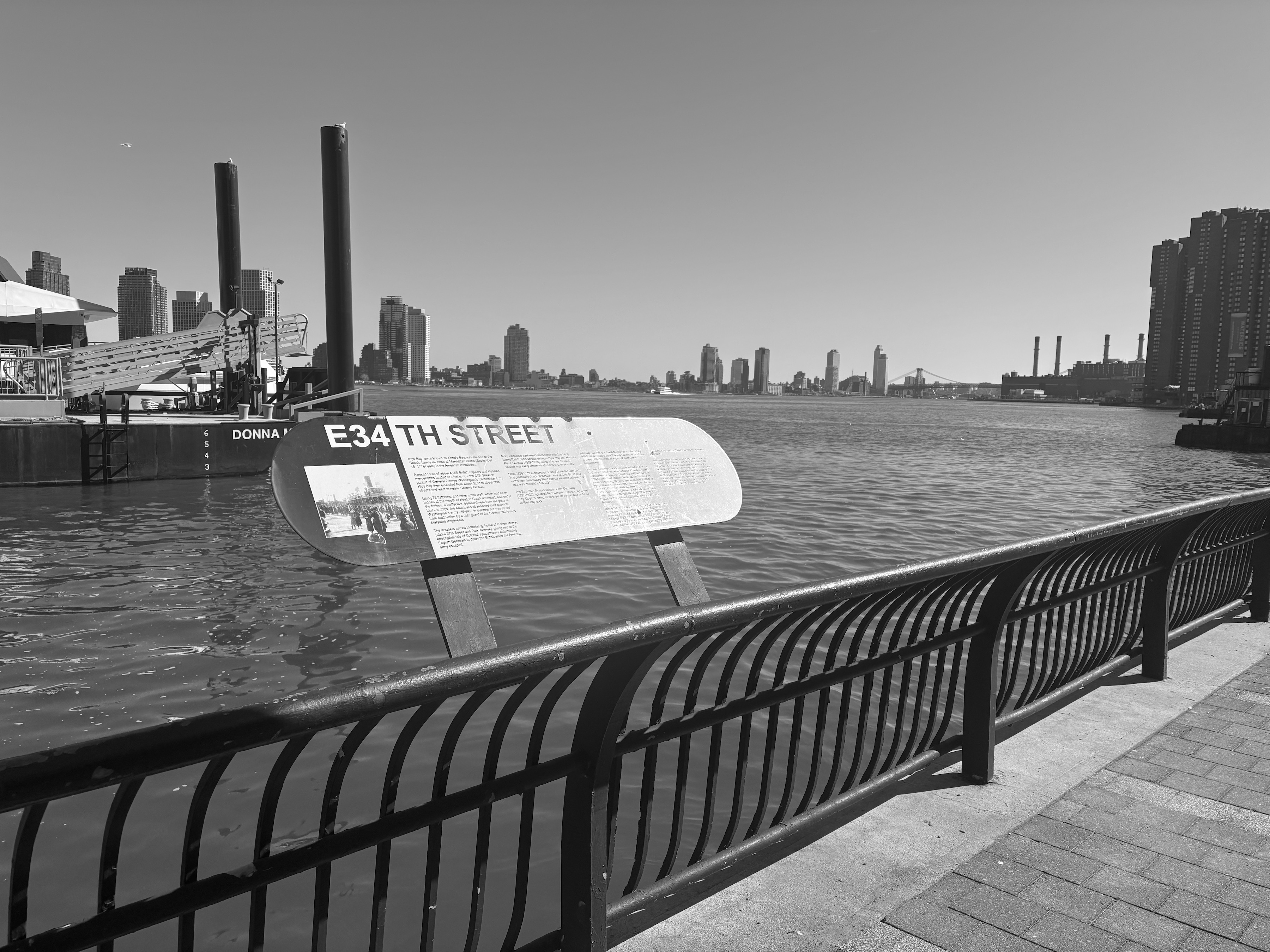
On September 15, 1776, William Howe’s troops landed at Kip’s Bay on Manhattan. After defeating Washington’s troops a couple weeks earlier at Long Island, Howe now intended to capture New York City. Kip’s Bay was located neat present-day E 34th Street on the East River. This area was a weak point in Washington’s defenses on Manhattan. The area was defended by Col. William Douglas’s 1,500-man brigade and a third of them were sick, and of the remainder, only half of that number were fit enough to man the trenches and oppose the landing.
At 10:00 a.m. the first wave of 80 British flatboats moved into the river with 4,000 British and Hessian troops aboard. By 11:00 a.m., the British fleet opened a cannonade against Douglas’s position. Approximately 80 guns fired on the militiamen for more than an hour. Their shallow ditches and weak defenses, coupled with their greenness, led them to a rout in the face of this overwhelming show of force by British naval superiority. General Clinton’s aide-de-camp, Francis Rawdon, from his boat saw Douglas’s men break and run. Clinton’s landing party thus, “pressed to shore . . . landed, and formed without losing a single man.”
The modern location of Kip’s Bay.
As the first wave of British and Hessians secured the beachhead, not all of Douglas’s men were able to escape as they retreated toward the King’s Bridge Road. Bartholomew James wrote in his journal that he “saw a Hessian sever a rebel’s head from his body and clap it on a pole in the intrenchments.” One historian asserted that, as other Americans surrendered, hands upward, that Hessians shot or bayoneted them.
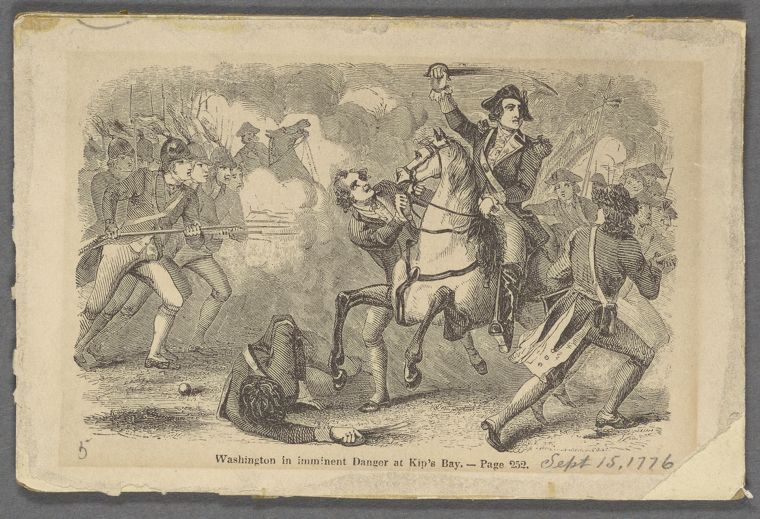
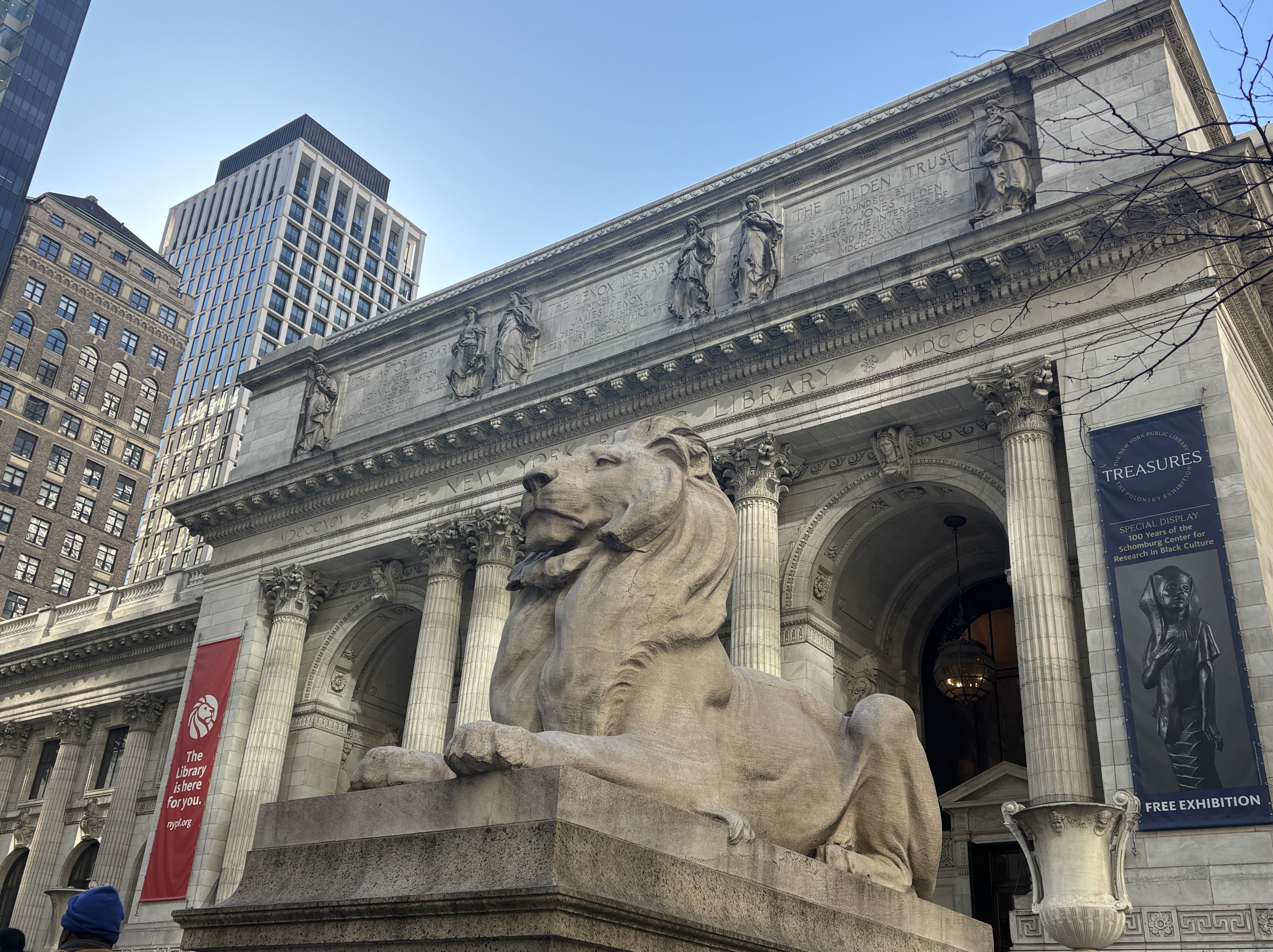
While Douglas’s men fled, George Washington finally arrived within a mile of the Patriot position at Kip’s Bay. “As soon as I heard the firing, I rode with all possible despatch,” Washington wrote to Congress the next day. Somewhere on Murray Hill, Washington came across General Putnam, who also rode towards the sound of the British salvos. “[T]o my great surprise and mortification,” Washington recounted, “I found the troops that had been posted in the lines retreating with the utmost precipitation . . . flying in every direction. . . . I used every means in my power to rally them into some order; but my attempts were fruitless and ineffectual.”
Washington “drew his sword and snapped his pistols, to check them; but they continued their flight,” noted James Thacher, an army doctor. As Washington’s ire at his fleeing men raged on, Col. William Smallwood reported that the Connecticut troops in flight “were caned and whipped by the Generals Washington, Putnam, and Mifflin, but even this indignity had no weight, they could not be brought to stand one shot.”
Washington confronted his retreating troops near the modern-day New York Public Library.
Approximately 2,000 Continental soldiers now appeared under the command of Brig. Gens. Samuel Parsons and John Fellows. Seeing the retreat of the Connecticut Militia and a pursuing enemy was enough to break these reinforcements. “The Panic that struck Gen. Fellows’s & communicated itself to Gen. Parsons’ Brigade disgraced the last Retreat,” General Greene recalled. “The 2 Brigades run away from about 40 or fifty men, and left Gen Washington standing alone within an hundred yards of the enemy.”
Washington was enraged by the cowardice of his men, and General Heath saw the normally reserved general break. “Gen. Washington threw his hat on the ground, and exclaimed, ‘Are these the men with which I am to defend America?’”
As the despondent commander tried in vain to rally and inspire his men, only the bravery and stubbornness of two of the general’s aides led them to grab the bridle of Washington’s horse and face him about to leave the field.
Learn more about this fateful and shameful day for American arms (and the patriotic efforts of a female New York patriot) in Mark Maloy and Dan Welch’s new book on the 1776 New York campaign: Conquer or Die, out this November!
Admiral Lord Richard Howe, 50 years old, found himself in an awkward position.
Admiral Lord Richard Howe, 1789, painted by John Singleton Copley
Howe commanded the Royal fleet even then investing Manhattan Island following the defeat of the Continental Army at Brooklyn Heights earlier in September. Nearly 400 ships of various sizes sailed under his command—the largest fleet England had thus far assembled.
Yet despite that military might, Howe had an additional role to fulfill. His Majesty, King George III, had appointed him as one of two “peace commissioners” charged with negotiating terms with the Americans. The other peace commissioner was Howe’s brother, General William Howe, commander of the Royal army. The makers of war were tasked with negotiating a peace.
Complicating matters even more, the brothers were not empowered to do much actual negotiating. Colonists first had to renounce their independence before any terms for a restored peace could be discussed. Pardons could then be liberally granted, although Howe did have a blacklist, a list of “Rebell[s] expressly excepted from Pardon.”
Lord Howe generally felt sympathetic toward the former colonies, and when he dispatched the paroled American general John Sullivan to Philadelphia with an overture for peace, Howe genuinely hoped for reconciliation.
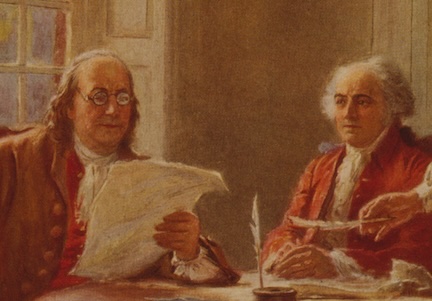
War and politics can both necessitate some strange bedfellows, and that was certainly the case 250 years ago today when two of the Revolution’s leading figures found themselves literally sharing a bed.
During the battle of Long Island on August 27, 1776, the British captured Gen. John Sullivan of New Hampshire. They then paroled Sullivan and sent him to Philadelphia bearing a message from the British Peace Commissioners, Admiral Lord Richard Howe and his brother, General William Howe. The Howes invited the Continental Congress to discuss terms for peace.
Most in Congress considered the overture disingenuous, and some even bore ill-will toward Sullivan for bringing such an odious message. However, delegates also understood that if they rebuffed the overture out of hand, it would look as though they, not Great Britain, were to blame for continued war. On September 6, Congress decided to appoint a three-man delegation to travel to the British headquarters on Staten Island, New York, to hear what the British had to say.